Engagement Diamond Ring Buying Guide for USA Couples
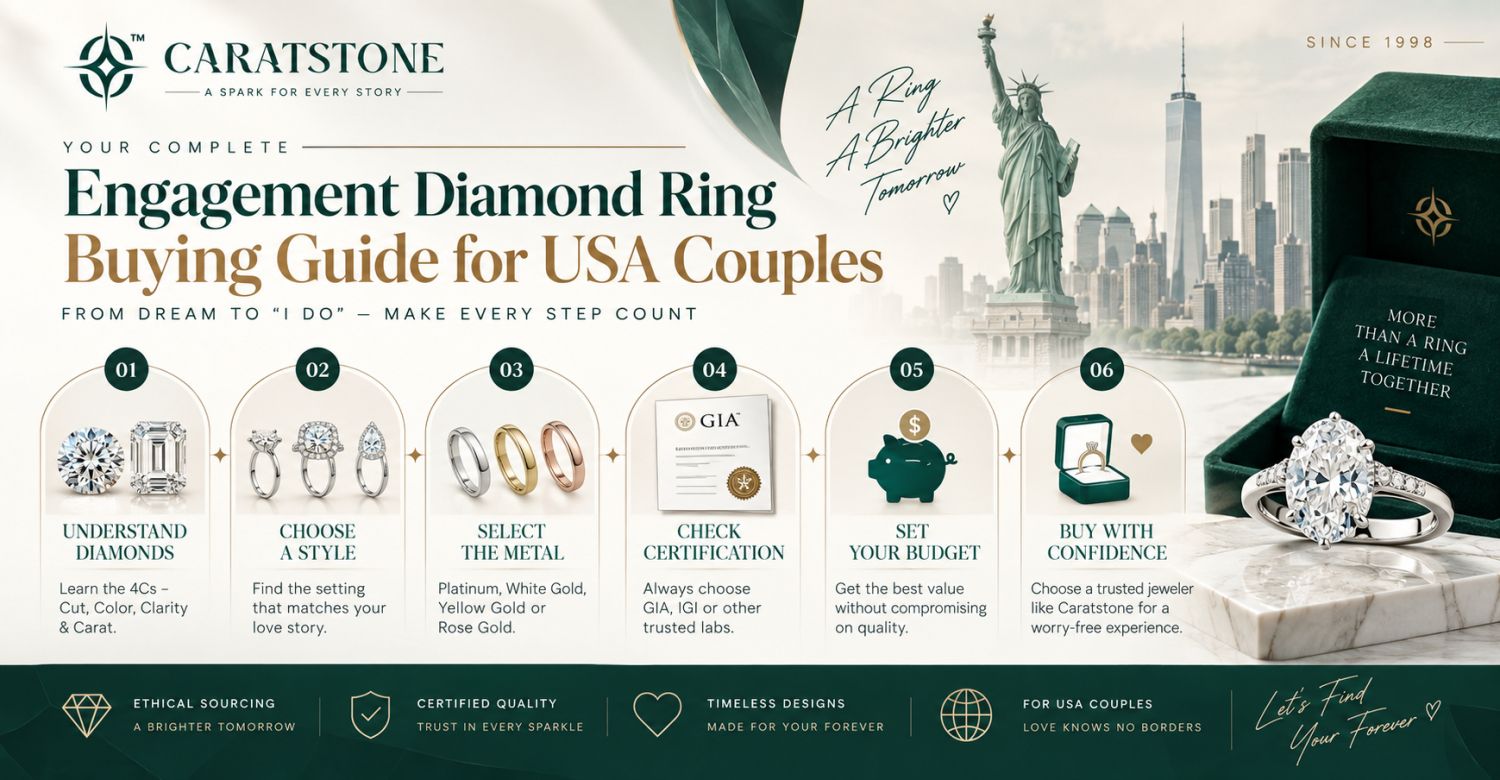
This guide helps USA couples navigate the engagement diamond ring buying process, from understanding the 4Cs, diamond shapes, settings, metals, and ring sizing to choosing between natural and lab-grown diamonds. It also covers diamond certification, budgeting, online buying, popular ring styles, and common purchasing mistakes, giving couples practical information to make a confident and informed choice.
Buying an engagement ring is more than choosing a beautiful diamond. It is a personal decision that combines style, symbolism, quality, and budget. For couples in the USA, the number of diamond shapes, ring settings, metals, and diamond options available can make the buying process feel overwhelming.
A good engagement diamond ring buying guide should help you understand what actually matters before making a purchase. From the diamond's 4Cs and certification to ring size, setting, metal, and the choice between natural and lab-grown diamonds, every detail can influence the final ring.
Whether you are shopping together or planning a surprise proposal, the goal is not simply to find the biggest diamond. It is to find an engagement diamond ring that reflects your partner's personality, fits comfortably within your budget, and feels meaningful for years to come.
This guide explains how to approach the process step by step so you can make a confident and informed choice.
How Do You Choose the Right Engagement Diamond Ring?
Choosing the right engagement ring starts with understanding your partner's style, your budget, and the characteristics you want in a diamond. Instead of focusing on one feature, consider the complete combination of diamond shape, cut quality, setting, metal, size, and overall design.
Consider Your Partner's Personal Style
Before looking at diamonds, think about what your partner actually wears.
Do they prefer simple and elegant jewelry, or do they like bold statement pieces? Do they usually wear yellow gold, white gold, or platinum? Their existing jewelry can provide useful clues.
A classic solitaire may suit someone who prefers timeless designs, while a halo or three-stone design may appeal to someone who wants more detail and visual impact.
Choose the Right Diamond Shape
Diamond shape is one of the first visual decisions you will make. Popular options include:
- Round
- Oval
- Princess
- Cushion
- Emerald
- Pear
- Marquise
- Radiant
- Heart
Round diamonds are known for their classic appearance, while oval and pear shapes can create a distinctive look. Emerald cuts offer a sophisticated, clean appearance, while cushion cuts have a softer and more romantic feel.
There is no universally best shape. The right choice depends on your partner's personal style.
Choose the Right Ring Setting
The setting determines how the diamond is held and contributes significantly to the ring's overall appearance.
Solitaire settings offer a clean, timeless look. Halo settings surround the center stone with smaller diamonds for additional detail and sparkle. Three-stone settings can create a meaningful design, while pavé settings add diamonds along the band.
When comparing diamond engagement rings, consider how the setting complements both the diamond shape and the person who will wear it.
What Are the 4Cs of a Diamond?
Understanding the diamond 4Cs is essential when buying an engagement ring. The 4Cs stand for Cut, Color, Clarity, and Carat, and together they help describe a diamond's characteristics and quality.
Cut
Cut has a major influence on how a diamond interacts with light. A well-cut diamond can appear bright and lively because its proportions allow light to return through the top of the stone.
This is why choosing a diamond based only on carat weight may not provide the appearance you expect.
Color
Diamond color refers to how much color is visible in a diamond. Traditional grading generally moves from more colorless grades toward diamonds with increasingly noticeable color.
The ideal choice depends on your preference, diamond shape, setting, and budget.
Clarity
Clarity describes the presence of internal characteristics, often called inclusions, and surface characteristics known as blemishes.
Higher clarity can be desirable, but not every inclusion is visible to the naked eye. Comparing diamonds based on actual appearance rather than simply selecting the highest possible clarity grade can be a practical approach.
Carat
Carat refers to diamond weight, not directly to its visible dimensions.
Two diamonds with the same carat weight can appear different in size depending on their shape, proportions, and cut. For this reason, carat should be considered alongside the other 4Cs rather than by itself.
How Much Should You Spend on an Engagement Ring in the USA?
There is no universal amount that every couple should spend on an engagement ring. Your engagement ring budget should reflect your financial situation, priorities, and the type of ring you want.
Set an Engagement Ring Budget First
Before comparing individual diamonds, decide how much you are comfortable spending.
A realistic budget can help narrow your choices and prevent you from becoming focused on features that are outside your financial plans. Remember that the final price can include more than the center diamond.
The setting, metal, additional stones, certification, customization, and other design elements can all influence the total diamond engagement ring cost.
What Affects Diamond Engagement Ring Prices?
The price of a ring can vary considerably based on:
- Diamond carat weight
- Cut quality
- Color
- Clarity
- Diamond origin
- Certification
- Ring setting
- Metal
- Additional diamonds
- Custom design details
Instead of asking only, "How much is an engagement ring?", compare what you receive for the price.
Natural vs. Lab-Grown Diamonds: Which Is Right for You?
One of the most important decisions for today's couples is whether to choose a natural or lab-grown diamond.
What Are Natural Diamonds?
Natural diamonds form naturally beneath the Earth's surface over extremely long periods of time. They are valued by many buyers for their natural geological origin, traditional appeal, and enduring symbolism.
What Are Lab-Grown Diamonds?
Lab-grown diamonds are created using controlled technological processes. They have the same fundamental chemical composition and crystal structure as diamonds and are available in a wide range of shapes, sizes, and qualities.
For couples comparing lab-grown diamond engagement rings, they can provide another option when balancing diamond characteristics and budget.
How Do Natural and Lab-Grown Diamonds Compare?
The biggest distinction is their origin.
Natural diamonds come from geological processes, while lab-grown diamonds are produced using technology. Both can be graded for characteristics such as cut, color, clarity, and carat.
The choice ultimately comes down to what matters most to you as a couple, including personal preference, budget, and the significance you place on diamond origin.
There is no need to choose based solely on trends. Consider which option best matches your priorities.
How Do You Find the Correct Engagement Ring Size?
Finding the correct size is especially important when buying a ring as a surprise.
Measure an Existing Ring
If your partner already wears a ring on the intended finger, you may be able to use it as a reference. However, keep in mind that different fingers can have different sizes.
Measure Finger Size
A professional jeweler can provide a more accurate measurement. Finger size can also vary slightly depending on temperature and other factors, so professional sizing is generally preferable when possible.
What If You Don't Know Your Partner's Ring Size?
If the proposal is a surprise, you can discreetly ask a close friend or family member, borrow a ring your partner wears, or seek guidance from a jeweler.
Avoid guessing if you can reasonably obtain a more reliable measurement.
A good engagement ring size guide can also help you understand the basics before purchasing.
Which Metal Is Best for an Engagement Ring?
The metal can change the overall appearance of an engagement ring and should complement both the diamond and the wearer's personal style.
Yellow Gold
Yellow gold has a warm, traditional appearance and works beautifully with both classic and contemporary designs.
White Gold
White gold offers a bright, modern appearance and pairs naturally with the look of many diamonds.
Rose Gold
Rose gold has a distinctive warm tone and can create a romantic, contemporary appearance.
Platinum
Platinum is valued for its durability and naturally white appearance, making it a popular choice for premium engagement ring designs.
Rather than choosing a metal based only on popularity, consider what your partner normally wears and how the metal works with the chosen setting.
Why Does Diamond Certification Matter?
A diamond grading report can provide important information about the stone you are considering.
What Is a Certified Diamond?
A certified diamond is accompanied by a grading report from a recognized gemological laboratory that evaluates characteristics such as the 4Cs
2. What Should You Check on a Diamond Certificate?
Before buying a certified diamond engagement ring, review the report details and make sure they correspond with the diamond being offered.
Pay attention to:
- Diamond shape
- Carat weight
- Color grade
- Clarity grade
- Cut information where applicable
- Measurements
- Report identification
3. Why Should Couples Buy a Certified Diamond?
Certification can make it easier to understand and compare diamonds. It gives buyers documented information about the stone rather than relying only on a product description.
For a significant purchase such as an engagement ring, having clear diamond information can make the buying decision more transparent.
What Should You Check Before Buying an Engagement Ring Online?
Online shopping can make it easier to compare different diamond engagement rings online, but you should review the product and seller information carefully.
Check the Diamond and Ring Details
Before purchasing, review:
- Diamond specifications
- Shape and carat
- Color and clarity
- Ring metal
- Setting details
- Ring dimensions
- Certification information
- Available sizes
Review Shipping and Return Policies
For USA couples buying online, check estimated delivery times and understand the return or exchange policy before placing an order.
Custom or personalized rings may have different terms from standard designs.
2. Check Warranty and Resizing Options
Find out whether resizing, repairs, or warranty support are available. This can be particularly important for engagement rings because the correct size and long-term wear matter.
3. Make Sure the Seller Provides Clear Product Information
A trustworthy shopping experience should provide enough information for you to understand what you are purchasing.
Avoid making a decision based solely on a low price. Compare the diamond specifications, craftsmanship, policies, certification, and overall value.
What Are the Most Popular Engagement Ring Styles for Couples?
Engagement ring trends change, but several styles remain popular because they offer distinct aesthetics.
A solitaire places attention on the center diamond and offers a timeless, uncluttered appearance.
A halo surrounds the center stone with smaller diamonds, creating a detailed and eye-catching design.
Three-Stone Engagement Rings
Three-stone designs feature multiple diamonds and can provide a balanced combination of symbolism and visual appeal.
Pavé Engagement Rings
Pavé settings use smaller diamonds along the band to add additional sparkle while maintaining focus on the overall design.
Vintage-Inspired Engagement Rings
Vintage-inspired rings often feature intricate details, distinctive settings, and designs influenced by earlier jewelry styles.
Minimalist Engagement Rings
For someone who prefers understated jewelry, minimalist designs can offer an elegant look without excessive detailing.
How Can You Avoid Common Engagement Ring Buying Mistakes?
Even experienced shoppers can make mistakes when they focus too heavily on one feature.
Choosing Carat Weight Over Cut Quality
A larger diamond is not automatically a more beautiful diamond. Cut quality can have a significant impact on brilliance and appearance.
Ignoring the Total Ring Budget
Remember to account for the complete ring rather than only the center diamond.
Buying Without Checking Certification
When certification is available, review the grading information before making a major purchase.
Guessing the Ring Size
An incorrect size can create unnecessary complications. Try to obtain a reliable measurement whenever possible.
Choosing a Style Without Considering Your Partner
The ring should reflect the person wearing it. Think about their everyday style rather than choosing a design solely because it looks impressive online.
Not Reading Return or Resizing Policies
Always understand the terms before purchasing, particularly when buying online.
Focusing Only on Price
The cheapest ring is not necessarily the best value. Look at the complete combination of diamond quality, design, materials, certification, and service.
Engagement Ring Buying Checklist for USA Couples
Before purchasing your engagement ring, use this quick checklist:
- Set a comfortable budget
- Decide between natural and lab-grown diamonds
- Choose a diamond shape
- Understand the 4Cs
- Select the ring setting
- Choose the metal
- Confirm the ring size
- Review diamond certification
- Check product specifications
- Compare designs and prices
- Review shipping and return policies
- Check resizing and warranty options
- Purchase from a seller that provides clear information
Taking these steps can make the buying process much more organized and less stressful.
Final Thoughts
Choosing an engagement diamond ring should be about more than finding the biggest or most expensive diamond. The best choice combines your partner's style with the right diamond characteristics, setting, metal, size, and budget.
Understanding the 4Cs, comparing natural and lab-grown diamonds, checking certification, and reviewing buying policies can help you make a more informed decision. Whether you are searching for a classic solitaire, a detailed halo design, or a modern statement ring, take the time to compare your options.
For couples in the USA, a thoughtful buying process can turn the search for an engagement ring into a meaningful part of the journey toward your next chapter together.
FAQs About Engagement Diamond Rings
How much should you spend on an engagement ring in the USA?
There is no fixed amount that every couple should spend. Set an engagement ring budget based on your personal finances, priorities, and preferred diamond and ring design rather than following a universal spending rule.
What are the 4Cs of an engagement diamond?
The 4Cs are Cut, Color, Clarity, and Carat. They help describe important characteristics of a diamond and can influence its appearance and price.
Which diamond shape is best for an engagement ring?
There is no single best diamond shape. Round, oval, princess, cushion, emerald, pear, marquise, and radiant shapes all offer different appearances. The best option depends on personal style and preference.
Are lab-grown diamonds good for engagement rings?
Lab-grown diamonds are diamonds created through controlled technological processes and can be considered by couples looking for an alternative to naturally mined diamonds. The choice depends on personal preferences, priorities, and budget.
Should I choose a natural or lab-grown diamond?
The choice depends on what matters most to you. Natural diamonds may appeal to buyers who value geological origin and tradition, while lab-grown diamonds provide another option for couples considering diamond characteristics and budget.
How do I know what engagement ring size to buy?
You can use an existing ring as a reference, discreetly ask someone close to your partner, or have the finger professionally measured. A professional jeweler can provide the most reliable sizing guidance.
Is diamond certification important when buying an engagement ring?
Yes. A diamond grading report provides documented information about characteristics such as carat, color, clarity, and other grading details. It can help buyers compare diamonds more confidently.
What is the most popular engagement ring style?
Popular choices include solitaire, halo, three-stone, pavé, vintage-inspired, and minimalist engagement rings. The right style ultimately depends on the wearer's personal taste.
Can an engagement ring be resized?
Many engagement rings can be resized, but it depends on the ring's design, setting, metal, and construction. Check the seller's resizing policy before purchasing.
What should I check before buying an engagement ring online?
Check the diamond specifications, certification, ring size, metal, setting, return policy, shipping information, warranty, and resizing options. Clear product information is especially important when buying online.
Can I buy diamond engagement rings online in the USA?
Yes, couples can compare and purchase diamond engagement rings online, but they should carefully review the diamond details, certification, seller policies, shipping, returns, and resizing options before ordering.