What Is Fine Jewelry? A Simple Guide to Precious Metals & Gemstones
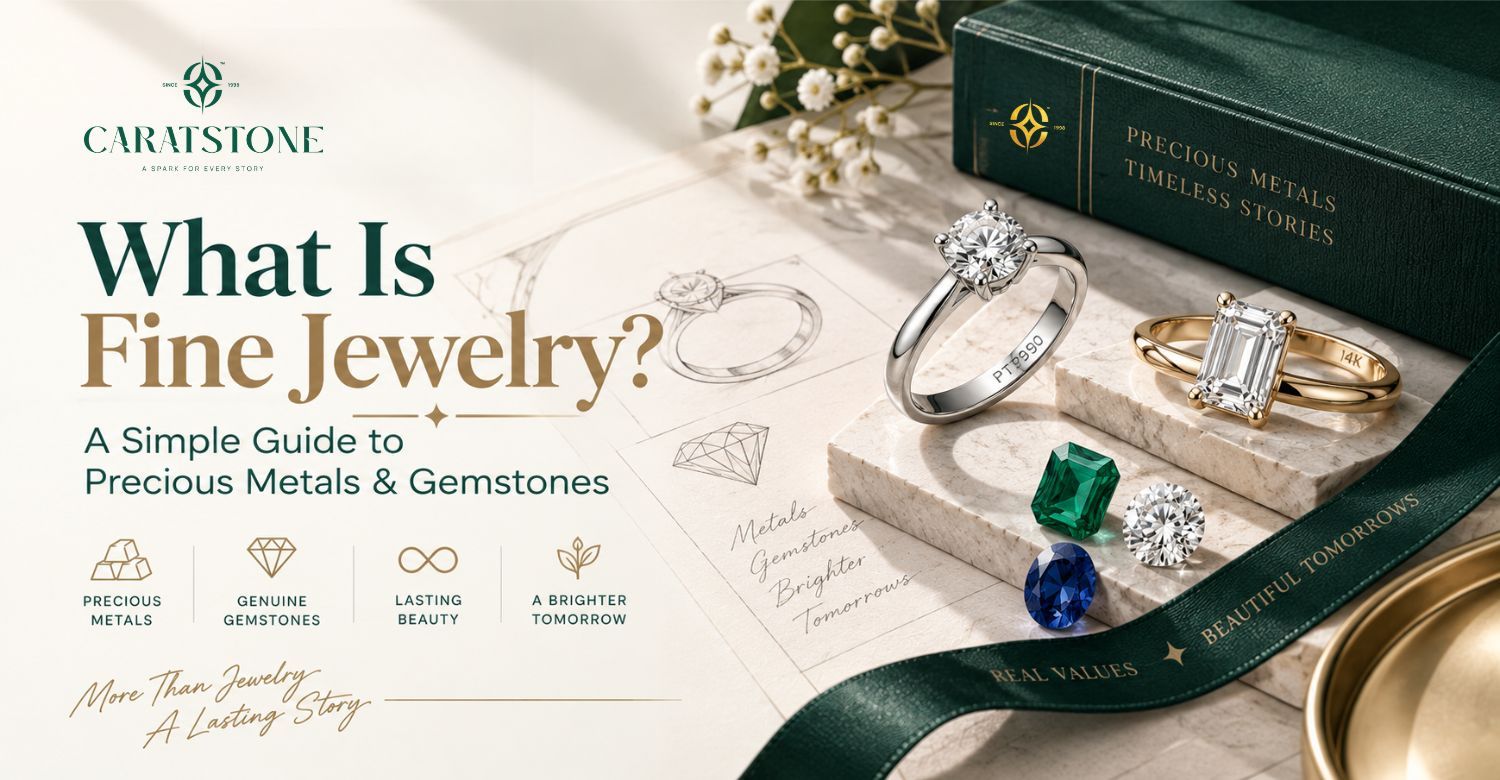
Fine jewelry is made from precious metals like gold, platinum, or sterling silver and set with genuine gemstones, making it durable enough to last for decades or generations. This guide explains how fine jewelry differs from fashion and demi-fine jewelry, how to verify quality through hallmarks, certifications, and craftsmanship, and how lab-grown diamonds can make genuine fine jewelry more accessible.
If you've ever wondered what fine jewelry is, exactly, and how it's different from the pieces sold in a mall kiosk or fast-fashion store, you're not alone. It's one of the most common questions first-time jewelry buyers have, and the answer is simpler than it sounds.
Fine jewelry is any piece made from precious metals, gold, silver, or platinum, set with genuine gemstones, built to last for decades rather than seasons. That's really the whole definition. Everything else- price, design, brand- is secondary to those two things: real metal, real stones.
What Is Fine Jewelry, Compared to Fashion Jewelry?
Understanding what is fine jewelry becomes a lot clearer once you see it next to what it isn't. Fashion jewelry, sometimes called costume jewelry, uses base metals like brass or alloy, plus synthetic or imitation stones. It's inexpensive, trend-driven, and not designed to last
Demi-fine sits in between, using some precious materials but not consistently both real metal and real stones. It's a reasonable middle ground, but it's worth knowing the difference before you pay fine-jewelry prices for a demi-fine piece.
The Precious Metals Behind Fine Jewelry
Gold
Gold has been the foundation of fine jewelry for thousands of years. In the US, it's most commonly sold as 14kt, offering a solid balance of durability and value, though 9kt and 18kt are also common depending on the piece. Mixing pure gold with other metals doesn't just adjust durability; it's also what creates yellow, white, and rose gold.
Platinum
Platinum is denser and purer than gold when used in jewelry, typically 90 to 95 percent pure metal. It's naturally white, hypoallergenic, and holds up exceptionally well to decades of daily wear, which is why it's often the top choice for pieces meant to be worn constantly.
Silver
Sterling silver, marked 925 for its 92.5 percent purity, is the most affordable precious metal used in fine jewelry. It offers a bright, timeless look, though it does tarnish over time and needs more frequent cleaning than gold or platinum.
The Gemstones That Define Fine Jewelry
Genuine gemstones are the second half of what makes a piece qualify as fine jewelry. The most recognized are often called the "Big Four": diamond, emerald, ruby, and sapphire, though plenty of other precious and semi-precious stones appear in fine pieces too, from aquamarine to tanzanite.
Does a Lab-Grown Diamond Count as Fine Jewelry?
This is a question that trips a lot of people up, and it's worth answering directly: yes. A lab-grown diamond is chemically, physically, and optically identical to a natural one, graded on the same 4Cs scale and certified by the same labs, including GIA and IGI. Origin doesn't change what the stone is made of. A piece set with a certified lab-grown diamond is genuinely fine jewelry, not a lesser category; it's simply a more accessible way to get there.
How to Spot Genuine Fine Jewelry
Anyone can claim a piece is fine jewelry. Here's how to actually verify it before you buy.
Check the metal hallmark
Genuine gold is stamped with its karat, like 14K or 18K. Platinum is typically marked PT950 or 950PT. Sterling silver carries a 925 stamp. No hallmark at all is a clear warning sign.
Check for gemstone certification
A real diamond, lab-grown or natural, should come with an independent report from a recognized lab such as GIA, IGI, SGL, or USGL. This confirms cut, color, clarity, and carat weight rather than asking you to take a seller's word for it.
Look at the craftsmanship
Fine jewelry has smooth, even finishes, secure settings, and prongs or bezels that hold stones firmly without looking rough or uneven. Sloppy metalwork is often a sign corners were cut somewhere else too.
What Actually Determines Fine Jewelry's Price?
Three things drive the cost of any fine jewelry piece: the weight and purity of the metal, the size and quality of the gemstone, and the complexity of the craftsmanship involved. None of these require a natural diamond specifically to qualify as genuine, high-quality fine jewelry.
This is exactly where lab-grown diamonds change the equation. Since lab-grown stones typically cost 70 to 85 percent less than natural diamonds of the same size and clarity, you can own real fine jewelry, solid gold or platinum, set with a certified genuine diamond, at a price point that would otherwise be out of reach.
Caring for Fine Jewelry So It Lasts
Fine jewelry is built to last generations, but only with basic upkeep. Remove pieces before swimming, cleaning, or exercising, since chlorine and household chemicals can dull metal and loosen settings over time. Store pieces separately to avoid scratching, and clean regularly with warm water, mild soap, and a soft brush to keep stones bright and metal free of buildup.
Ready to Explore Fine Jewelry That Fits Your Budget?
Now that you know what fine jewelry really comes down to- real metal, real stones, and honest craftsmanship- choosing your first piece gets a lot less intimidating. CaratStone offers certified lab-grown diamonds set in 9kt, 14kt, 18kt gold, and platinum, so you can own genuine fine jewelry without a natural-diamond budget. Browse the collection or start designing your own piece today.
Frequently Asked Questions (FAQ's)
1. What is fine jewelry, in one sentence?
Fine jewelry is any piece made from precious metals like gold, silver, or platinum, set with genuine gemstones, designed to last for decades rather than a season or two.
2. What is fine jewelry's biggest difference from fashion jewelry?
Fine jewelry uses real precious metals and genuine gemstones, while fashion jewelry uses base metals and synthetic or imitation stones, which is why fine jewelry holds up over decades, and fashion jewelry generally doesn't.
3. Does a lab-grown diamond count as fine jewelry?
Yes. A lab-grown diamond is chemically identical to a natural one and certified by the same labs, so a piece set with a certified lab-grown diamond is genuine fine jewelry, not a lower-tier alternative.
4. What hallmark should I look for to confirm real gold?
Look for a karat stamp such as 14K or 18K. No hallmark at all, or a mark that doesn't match what the seller claims, is a sign to ask more questions before buying.
5. Is fine jewelry a good investment?
It can hold value well, particularly natural diamonds and higher-purity metals, though the main reason to buy fine jewelry should be lasting quality and genuine materials rather than resale alone.