Platinum vs. White Gold: Which Metal Is Better for a Ring?
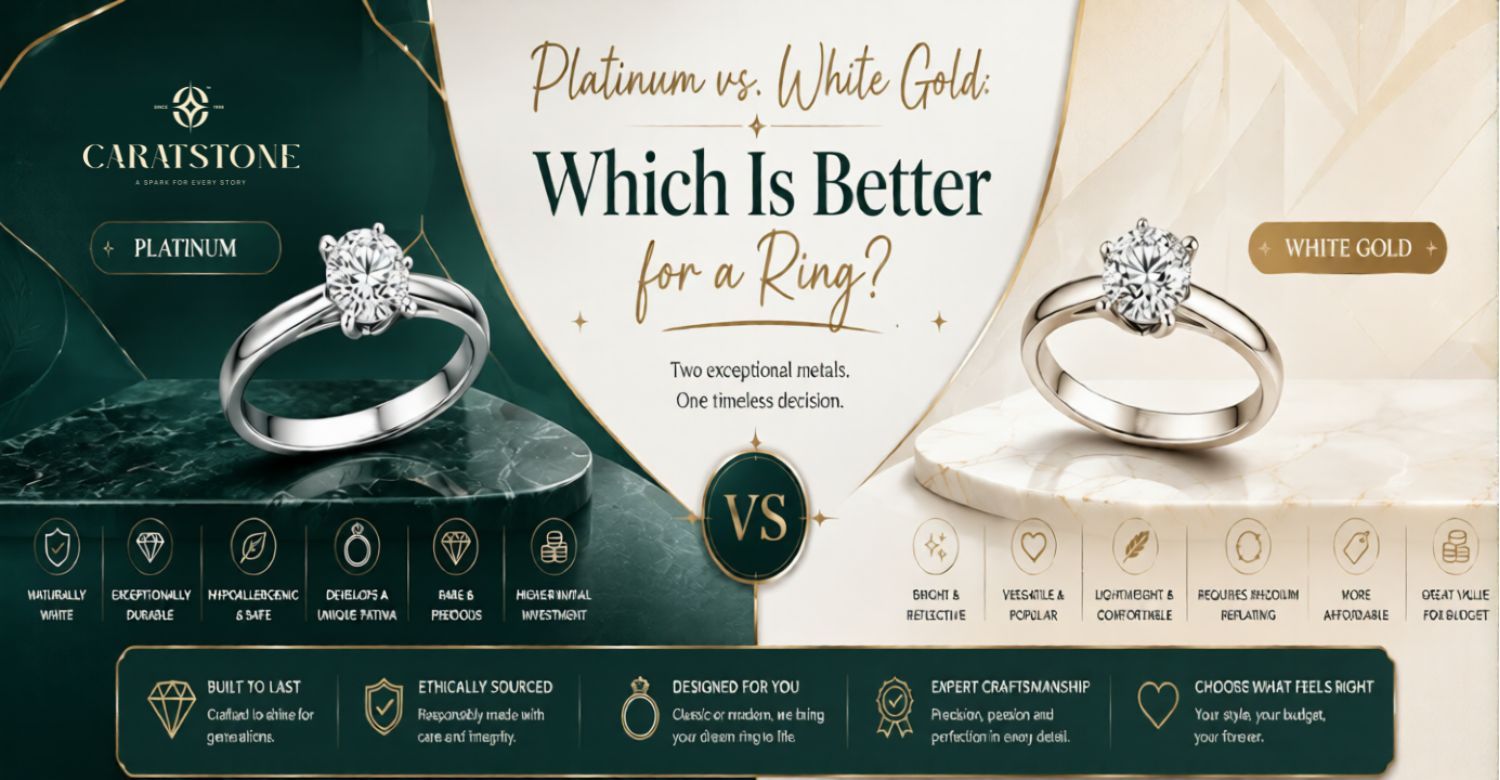
Platinum and white gold can look almost identical, but they differ in price, purity, durability, maintenance, and skin sensitivity. White gold is more affordable upfront and can leave more of your budget for the diamond, but its rhodium plating typically needs refreshing every 1–3 years. Platinum costs more initially but is naturally white, highly pure, durable, and requires much less maintenance. Ultimately, white gold is ideal for budget-conscious buyers who don't mind occasional replating, while platinum is better suited to those who prioritize low maintenance, long-term durability, or hypoallergenic properties. Both are excellent choices for an engagement ring, so the best option depends on your budget, lifestyle, and personal priorities.
Platinum and white gold can look nearly identical sitting side by side in a display case, which is exactly why so many people get stuck choosing white gold or platinum for an engagement ring. Here's the short version: white gold costs less upfront but needs occasional maintenance, while platinum costs more but keeps its color and strength with almost none. Neither is objectively "better,"; they're just different trade-offs, and which one is right for you depends on how you actually plan to wear the ring day to day.
Here's everything that goes into a platinum vs white gold ring decision, broken down clearly.
The Real Difference Between Platinum and White Gold
White gold isn't naturally white. It starts as pure yellow gold, alloyed with white metals like palladium, silver, or nickel to shift its color, then finished with a rhodium plating to give it that bright, silvery shine. Platinum, on the other hand, is naturally white and used in jewelry at a much higher purity, typically 90 to 95 percent pure metal, compared to roughly 58 to 75 percent for 14kt and 18kt white gold.
That purity gap is the root of almost every other difference between the two: price, durability, and how each one ages over the years.
White Gold vs. Platinum Price Difference: Where They Genuinely Diverge
This is usually the deciding factor, so let's be direct about it. The white gold vs platinum price difference is real and consistent; platinum costs more, often by a significant margin, because it's denser, purer, and rarer as a raw material. If you're working with a fixed engagement ring budget, choosing white gold over platinum can free up real money to spend on a larger or higher-clarity diamond instead.
That said, "more expensive" isn't the same as "not worth it." Platinum's higher upfront cost also comes with lower long-term maintenance spending, which is the next thing worth understanding before deciding on price alone.
Platinum Engagement Ring Durability vs. White Gold: The Trade-Off Most Guides Get Wrong
Both metals are genuinely durable and appropriate for a ring worn every day, so this isn't a case of one being fragile and the other bulletproof. The real difference is how each one wears over time.
Platinum is denser and doesn't lose metal when it scratches; it actually displaces, so a scratched platinum ring develops a soft, brushed-looking patina over years rather than thinning out. White gold is harder on the surface initially thanks to its rhodium plating, but that plating wears down gradually, which is where white gold engagement ring maintenance comes in; it typically needs to be reapplied every one to three years depending on how often the ring is worn.
Neither of these is really a flaw; they're just different maintenance patterns. Platinum asks for patience with a changing patina. White gold asks for a replating appointment every so often to stay looking bright white.
Which One Actually Lasts Longer?
Here's a distinction most comparison guides blur together: platinum is more durable in terms of density and resistance to metal loss, but that doesn't mean a white gold ring is going to fail or fall apart. Properly cared for, both metals comfortably last a lifetime.
What changes is upkeep. A platinum ring bought today will likely still look essentially the same in twenty years with only routine cleaning. A white gold ring will still be structurally intact in twenty years too, but it will have visited a jeweler for rhodium replating several times along the way to keep that crisp white finish, since the underlying gold alloy has a warmer tone once the plating wears through.
Is Platinum Better Than White Gold for Sensitive Skin?
This matters more than people expect going in. Looking purely at hypoallergenic engagement ring metal options, platinum is naturally hypoallergenic and contains no nickel, making it the safer choice if you have sensitive skin or a known metal allergy. White gold alloys can contain trace nickel, and for some wearers, that's enough to irritate over time, even under a rhodium coating that eventually wears away.
If you've ever had a reaction to costume jewelry or lower-purity gold, this is worth factoring in before choosing white gold on price alone.
So, Is Platinum Better Than White Gold? Which Should You Choose?
There's no single right answer, but there is a right answer for your priorities.
Choose white gold, if you want to put more of your budget toward the diamond itself, you don't mind an occasional replating appointment, and you're not dealing with metal sensitivities.
Choose platinum if, low maintenance matters more to you than upfront cost, you have sensitive skin, or you simply want a ring that looks the same decade after decade without regular upkeep.
If you're still torn, ask yourself one question: would you rather pay more now and less later, or less now with a small recurring cost down the line? That single trade-off is really what platinum vs white gold comes down to.
Choosing Your Custom Engagement Ring Metal
Whichever metal you land on, CaratStone offers both platinum and 9kt, 14kt, and 18kt white gold across every setting and shape in the catalog, paired with certified lab-grown diamonds that keep the overall cost accessible regardless of which metal you choose. Picking your custom engagement ring metal doesn't have to mean guessing, either. CaratStone's custom design tool lets you preview your exact setting in both metals before you commit to either one.
Frequently Asked Questions
1. Is platinum really that much more expensive than white gold?
Yes, typically noticeably so, since platinum is denser, purer, and used in higher concentrations in jewelry than white gold's 14kt or 18kt alloys.
2. How often does white gold need to be replated?
Roughly every one to three years, depending on how often the ring is worn, since the rhodium plating that gives white gold its bright shine wears down gradually.
3. Is platinum hypoallergenic?
Yes. Platinum contains no nickel and rarely causes allergic reactions, making it the better option for sensitive skin compared to white gold, which may contain trace nickel.
4. Can you tell platinum and white gold apart just by looking?
Rarely, when the ring is new, since freshly plated white gold looks nearly identical to platinum; over time, as the plating wears, white gold takes on a warmer tone while platinum stays consistently white.
5. Does platinum or white gold hold diamonds more securely?
Both are strong enough to securely hold diamonds in any setting, including delicate pavé and halo styles. However, platinum's added strength gives it a slight edge for very small or delicate prong work.
6. Is 18kt white gold better than platinum?
Not better, just different. 18kt white gold has higher gold purity than 14kt, but platinum still exceeds it in overall purity and durability. The right choice depends on your budget and maintenance preference, not which one is objectively superior.